Chess is not just about the moves on the board â you also play against the clock. Before entering a tournament, you must understand expressions like "90+30", "15+10", or "3+2". In this guide, we explain everything in detail, from FIDE's official time control definitions to Fischer increment, from tournament formats to rating impact.
What Is Time Control?
Time control is the rule that determines the total thinking time given to each player in a chess game. While players make their moves, their clocks run; when their time expires â if the opponent has sufficient mating material â they lose the game.
Time control consists of two basic components:
- Main time (base time): The total time a player has for the whole game or for a certain number of moves
- Extra time (increment/delay): Bonus time added after each move
FIDE Time Control Categories
FIDE (International Chess Federation) divides time controls into three official categories according to total time. The following formula is used to determine the category:
| Category | Total Time | Typical Format |
|---|---|---|
| Classical (Standard) | ⥠60 minutes | 90+30, 120+30 |
| Rapid | > 10 and < 60 minutes | 15+10, 25+10 |
| Blitz | ⤠10 minutes | 3+2, 5+3 |
Classical (Standard) Chess
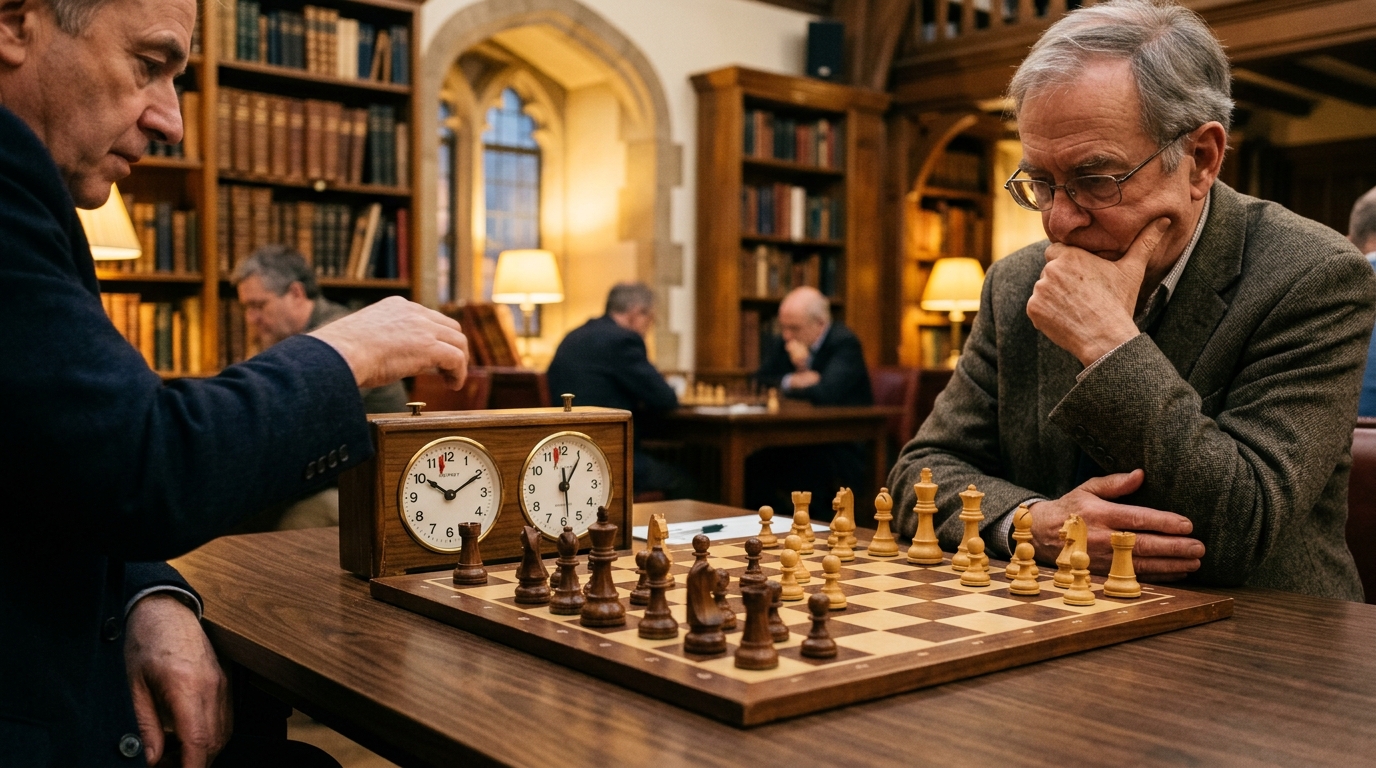
Classical chess is the most traditional and prestigious format. It gives players the opportunity to think deeply and is the format in which the highest-quality games are played.
Common Classical Formats
| Format | Description | Where It Is Used |
|---|---|---|
| 90+30 | 90 min main time + 30 sec per move | National tournaments, Turkish Chess Federation tournaments |
| 40/120 + 30/60 + 30sec | 120 min for the first 40 moves, then 60 min + 30 sec | Candidates Tournament, Olympiad |
| 40/120 + 20/60 + 15sec + 30 | Complex multi-stage control | World Championship Match |
Who Is Classical Chess Suitable For?
- Players who enjoy deep analysis and strategy
- Those who want to apply opening preparation at the board
- Those who want to earn an official FIDE rating
- Developing players who want to gain tournament experience
Rapid Chess
Rapid chess can be thought of as a bridge between classical and blitz. It gives enough thinking time, but without the fatigue of long games. Its popularity has increased greatly in recent years.
Common Rapid Formats
| Format | Description | Total Time |
|---|---|---|
| 15+10 | 15 min base time + 10 sec per move | 25 minutes |
| 25+10 | 25 min base time + 10 sec per move | 35 minutes |
| 10+5 | 10 min base time + 5 sec per move | 15 minutes |
The 15+10 format is used in the FIDE World Rapid Championship. This format provides a perfect balance between strategic depth and speed.
Blitz Chess
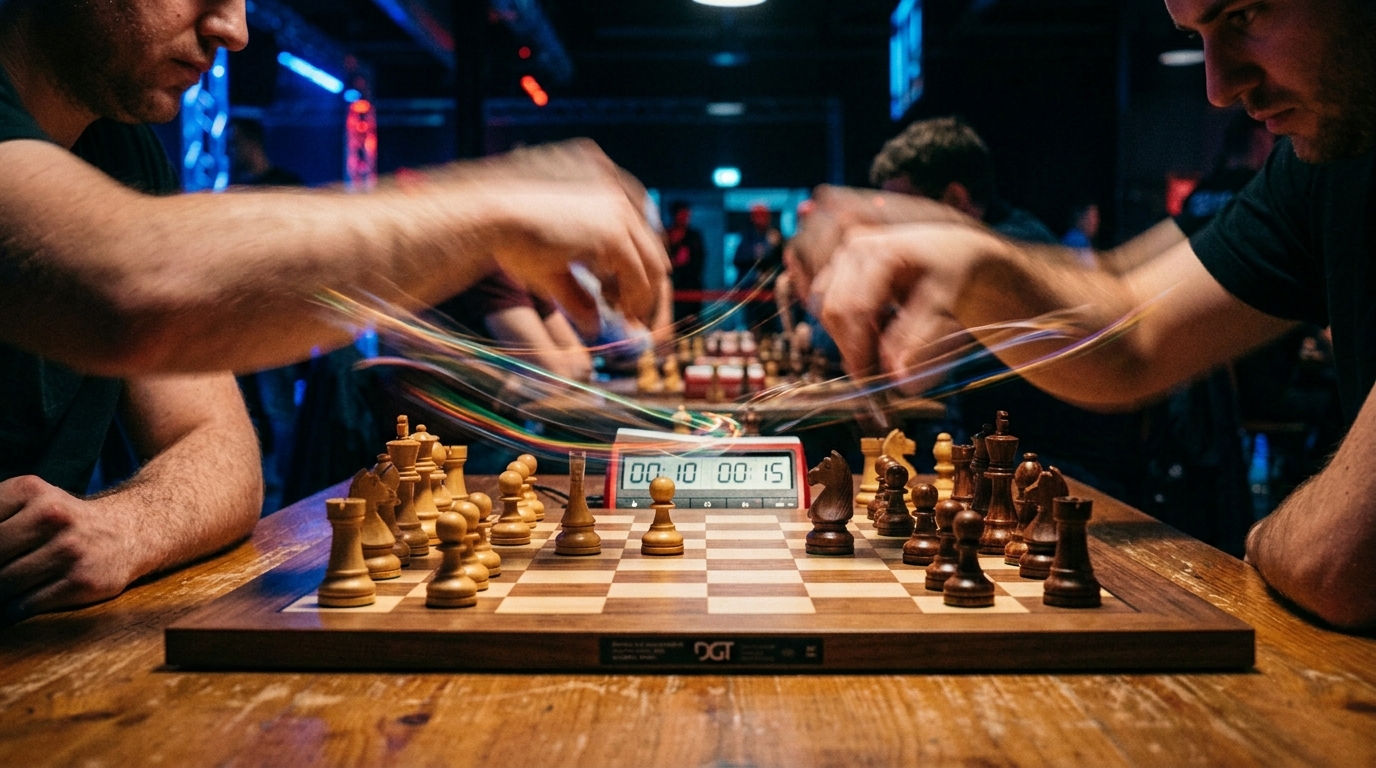
Blitz chess is the most exciting format, where speed and intuition take center stage. Players need to make the right decisions within seconds. On online platforms, blitz is the most popular format.
Common Blitz Formats
| Format | Description | Total Time |
|---|---|---|
| 3+2 | 3 min base time + 2 sec per move | 5 minutes |
| 5+0 | 5 min base time, no increment | 5 minutes |
| 5+3 | 5 min base time + 3 sec per move | 8 minutes |
Things to Watch Out for in Blitz
- Pressing the clock: Donât forget to press the clock after making your move â otherwise your time will keep running
- Rule violations: In blitz, an arbiter is usually not present; in rule disputes, an arbiter is called
- Insufficient material: Even if your opponent runs out of time, if you do not have enough material to checkmate (for example, only a king), the game is drawn
Bullet Chess
Bullet chess is the fastest chess format. Usually, 1 minute or less is given. FIDE does not officially define bullet as a separate category â technically, it is considered within blitz.
Bullet chess requires reflexes and pattern recognition skills to be at the highest level. In this format, intuitive decisions dominate rather than strategic planning.
What Are Increment and Delay?
There are two basic additional time mechanisms used in modern chess clocks:
Fischer Increment (Increment)
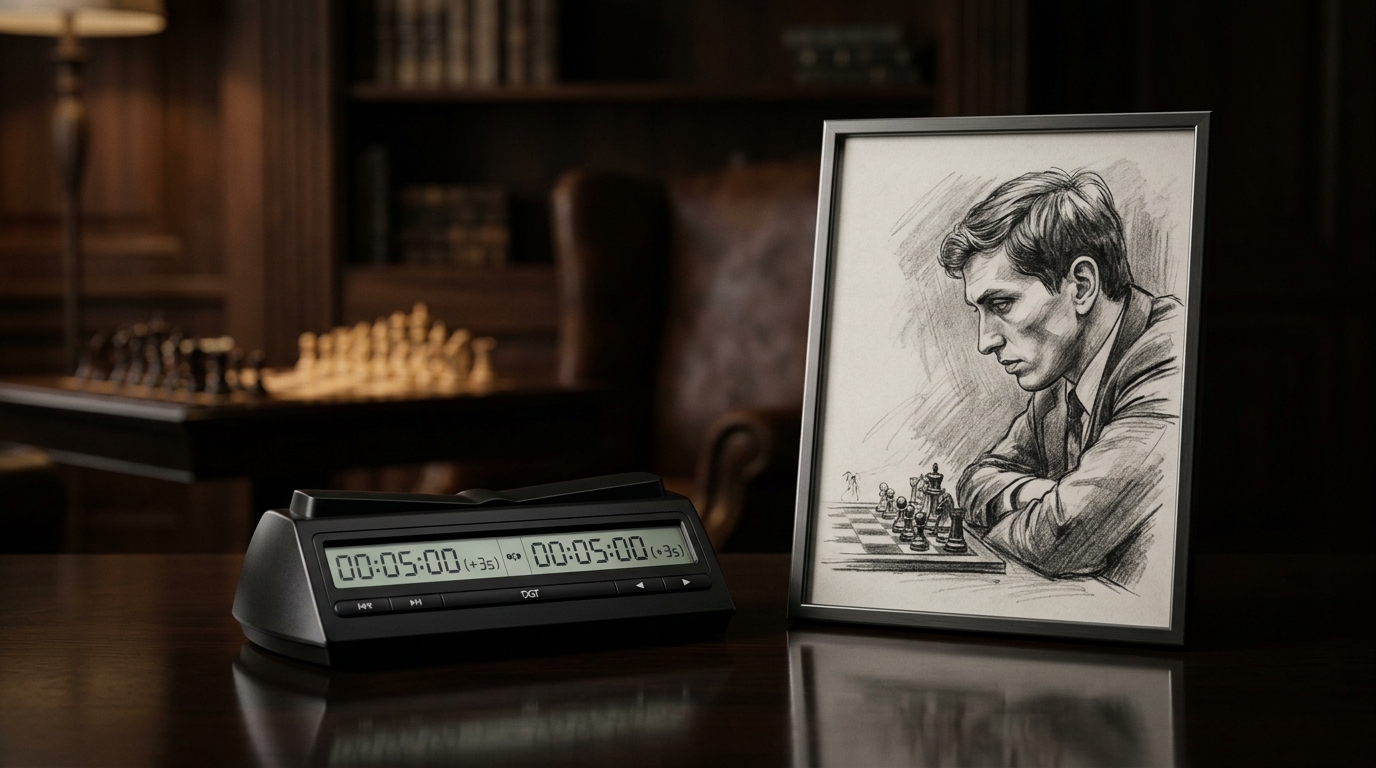
This system, patented in 1988 by Bobby Fischer, is today the most widely used additional time method worldwide.
After each move, the specified amount of time (for example, 30 seconds) is added to the player's remaining time.
Example: In a 90+30 format, if your remaining time is 2 minutes at the 90th minute, after making your move your time increases to 2:30.
Advantage: Unused increment time accumulates. If you play quickly, you gain time!
Bronstein Delay
In this less common system, at the start of each move the clock does not run for a certain period of time.
At the start of each move, the clock stops for the specified duration (for example, 5 seconds). However, unlike Fischer, unused time does not accumulate.
Example: With a 5-second delay, if your remaining time is 1:00 and you make your move in 3 seconds, your time remains 1:00 (the 2 seconds of unused delay are lost).
Comparison
| Feature | Fischer Increment | Bronstein Delay |
|---|---|---|
| Time accumulation | Yes, unused time accumulates | No, it does not accumulate |
| When it is added | After the move | Before the move (delay) |
| Prevalence | Standard worldwide | Common in the USA (USCF) |
| FIDE usage | In all official tournaments | Rarely |
Time Control Calculation Formula
To determine which category a time control falls into, you can use FIDE's following formula:
Calculation Examples
Example 1: Which category is 15+10?
Total = 15 + (60 Ã 10/60) = 15 + 10 = 25 minutes â Rapid
Example 2: Which category is 3+2?
Total = 3 + (60 Ã 2/60) = 3 + 2 = 5 minutes â Blitz
Example 3: Which category is 90+30?
Total = 90 + (60 Ã 30/60) = 90 + 30 = 120 minutes â Classical
Example 4: Which category is 10+0?
Total = 10 + 0 = 10 minutes â Blitz (10 ⤠10)
Example 5: Which category is 10+5?
Total = 10 + (60 Ã 5/60) = 10 + 5 = 15 minutes â Rapid (15 > 10)
Impact on Rating
Since 2012, FIDE has published three separate rating lists:
K-Factor and Time Control
The K-factor in FIDE's rating calculation formula is the same for all time controls:
- K=40: For the first 30 FIDE-rated games (new players)
- K=20: Players rated below 2400
- K=10: Players rated 2400 and above, or players who have exceeded 2400 at any time
id="turnuva-formatlari">Time Controls of Major Tournaments
| Tournament | Time Control | Category |
|---|---|---|
| World Championship Match | 40/120 + 20/60 + 15sec + 30min | Classical |
| FIDE Candidates Tournament | 40/120 + 30min + 30sec increment | Classical |
| Chess Olympiad | 90min + 30sec increment (entire game) | Classical |
| FIDE World Rapid Championship | 15min + 10sec increment | Rapid |
| FIDE World Blitz Championship | 3min + 2sec increment | Blitz |
| Chess.com Titled Tuesday | 3min + 1sec increment | Blitz (online) |
History of the Chess Clock
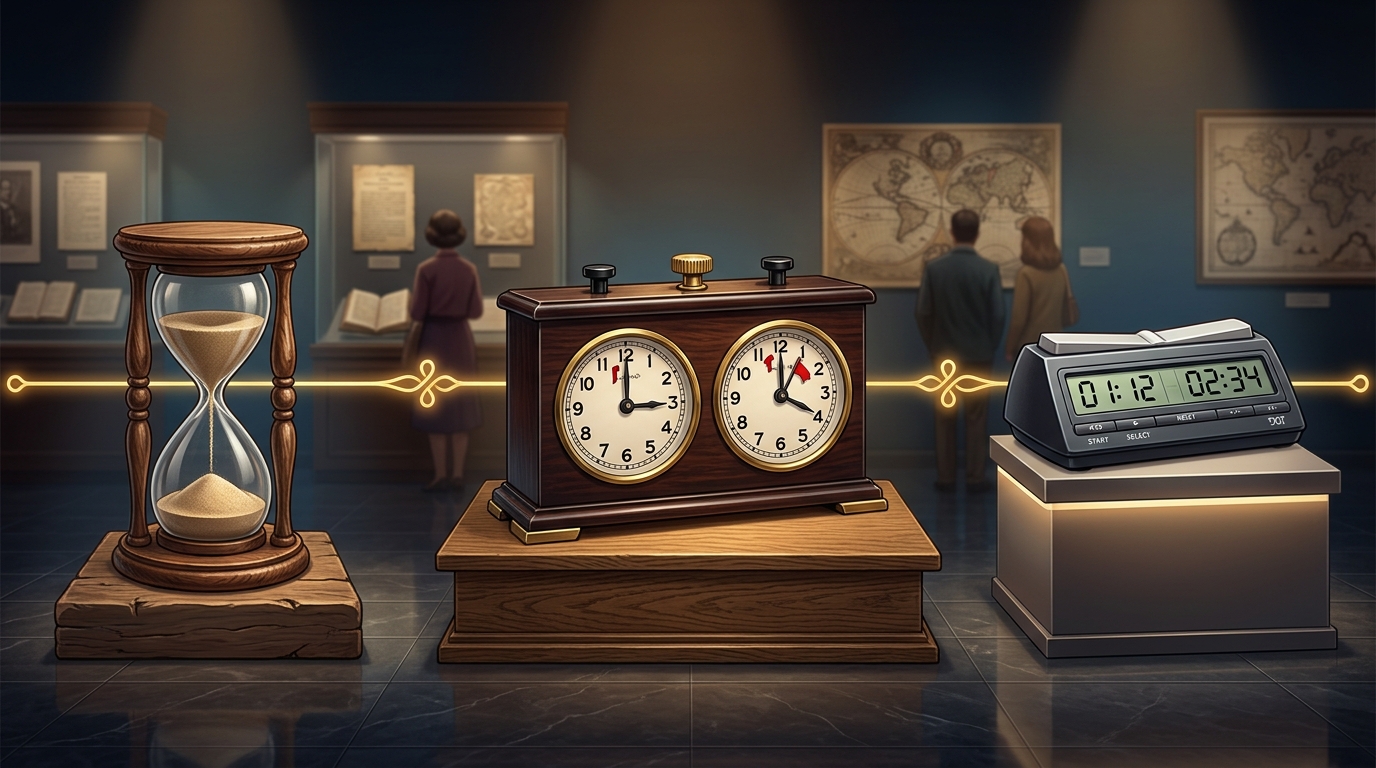
The evolution of the chess clock is as interesting as the game itself:
In the first chess tournaments, there was no time limit. Some games could last for days! At the 1851 London tournament, Howard Staunton complained about his opponent playing excessively slowly.
For the first time, hourglasses began to be used. Each player was given an equal amount of sand.
Thomas Wilson invented the first dual-dial mechanical chess clock. This clock started one player's clock when the other player's clock was stopped.
A "flag" was added to clocks. When time ran out, the flag would fall, visually indicating a time forfeit. The expression "to drop the flag" comes from here!
Bobby Fischer obtained the patent for a digital clock that adds time after each move. This invention prevented won positions under time pressure from being lost due to insufficient time.
The company DGT (Digital Game Technology) produced the digital clocks that are standard in tournaments today. With Fischer increment support, it modernized the chess clock.
FIDE began publishing separate rating lists for Classical, Rapid, and Blitz. This made it possible for players' performance in each format to be evaluated independently.
Frequently Asked Questions
What happens if my time runs out?
When your time runs out (your flag falls), if your opponent claims it, you lose the game. However, there is one exception: if your opponent does not have sufficient material to checkmate you (for example, if only the king remains), the game ends in a draw.
What happens if time runs out in games played without increment?
In games without increment (for example, 5+0), if your time runs out, you lose immediately (except for the insufficient material exception). That is why formats with increment are considered fairer.
Which time control should I play?
If you want to improve, start with the classical or rapid format. The classical format gives you the opportunity to analyze your moves and understand your mistakes. Blitz and bullet are ideal for testing pattern recognition and your opening knowledge, but on their own they are not sufficient for improvement.
Are online and over-the-board time controls the same?
They are the same in format, but on online platforms (Chess.com, Lichess), clock delay (lag) is compensated for. Also, most online tournaments do not affect FIDE rating.
Which time control is used in TSF tournaments?
In TSF (Turkish Chess Federation) tournaments, the 90+30 (classical) or 15+10 (rapid) formats are generally used. There are minimum time control requirements for tournaments that affect UKD rating.
Why is increment important?
Increment prevents a player in a won position from losing simply because of insufficient time. Bobby Fischer's invention is considered one of the most important innovations in modern chess. Today, FIDE recommends using increment in all official tournaments.
Comments
Share your thoughts. Comments appear after moderation approval.